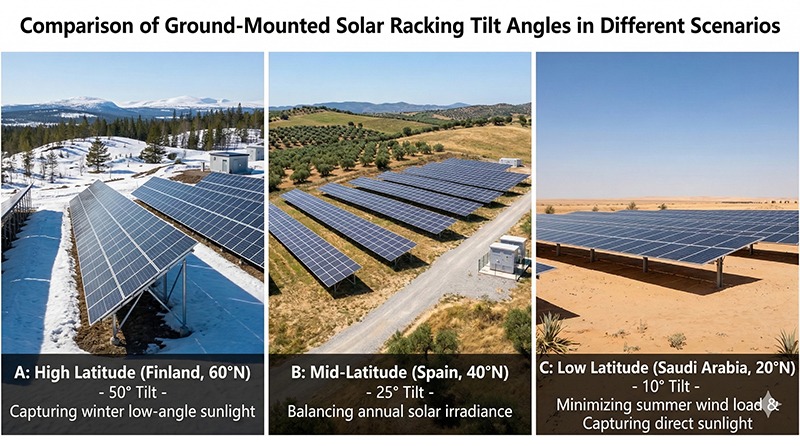
Tatsächlich gibt es keine allgemeingültige Antwort. Der optimale Neigungswinkel hängt von verschiedenen Faktoren ab, wie beispielsweise dem Breitengrad, dem lokalen Wetter sowie Schnee-, Regen- und Windverhältnissen. Die Wahl des richtigen Neigungswinkels kann die Stromerzeugung steigern und die Solaranlage über viele Jahre schützen.
Bei KUNST ZEICHEN Wir verfügen über mehr als 20 Jahre Erfahrung mit Solarmontagelösungen. Hier sind einige Grundregeln, die Ihnen bei der Wahl des richtigen Neigungswinkels helfen können.
Durch die Verwendung des richtigen Neigungswinkels können Solarpaneele das ganze Jahr über mehr Sonnenlicht empfangen.
In regnerischen oder staubigen Gebieten: Selbst in warmen Regionen wird eine Mindestneigung von etwa 10° empfohlen. Liegen die Paneele völlig flach, können sich Regenwasser und Staub auf der Oberfläche ablagern. Dies kann mit der Zeit die Stromerzeugung verringern. Eine leichte Neigung ermöglicht es dem Regen, die Paneele auf natürliche Weise zu reinigen.
Solarmodule mit großen Neigungswinkeln können bei starkem Wind wie ein Segel wirken. In windigen Gebieten oder Küstenregionen wählen Ingenieure daher mitunter einen etwas geringeren Neigungswinkel, um die Stabilität des Systems zu verbessern und die Baukosten zu senken.
4. Flexible Winkellösungen von ART SIGN
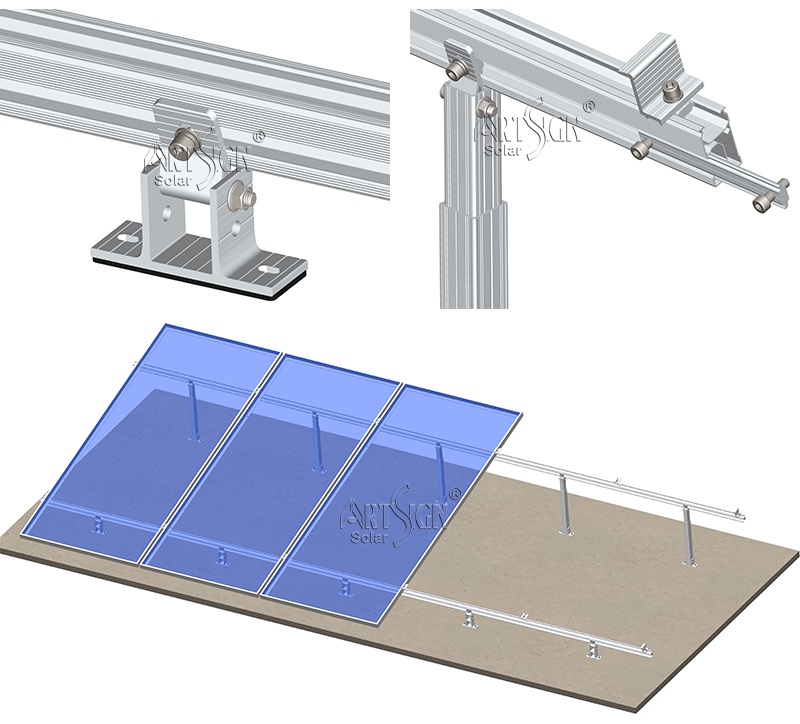
Bei einigen Projekten wünschen sich die Kunden die Möglichkeit, den Winkel der Solarmodule je nach Jahreszeit oder Installationsbedingungen anzupassen.
Um dieser Nachfrage gerecht zu werden, bietet ART SIGN verstellbare Solarmontagesysteme an mit
verstellbares Neigungsset
Diese Konstruktion ermöglicht es Installateuren, den Neigungswinkel der Solarmodule während der Installation problemlos zu verändern. Sie bietet mehr Flexibilität und trägt zur Optimierung der Energieproduktion an verschiedenen Standorten bei.
Diese verstellbaren Solarmontagehalterungen werden häufig für Dach- und Freiflächen-Solarprojekte eingesetzt, insbesondere dort, wo Kunden eine einfache und flexible Installationslösung wünschen.
Die Wahl des richtigen Neigungswinkels ist ein wichtiger Schritt bei der Entwicklung eines effizienten Solarmontagesystems. Der optimale Winkel hängt von Breitengrad, Schnee-, Regen- und Windverhältnissen ab.
Mit der richtigen Konstruktion und Montagelösung können Solarpaneele mehr Strom erzeugen und eine längere Lebensdauer erreichen.
Wenn Sie ein Solarprojekt planen und professionelle Solarmontagelösungen benötigen, steht Ihnen das Team von ART SIGN gerne zur Seite, um das beste System für Ihr Projekt zu finden.
Bei Fragen zur optimalen Solarpanel-Konstruktion kontaktieren Sie uns bitte.
E-Mail:
sales@artsign.net.cn
WhatsApp / WeChat Skype: +86 18030235875
, Danke
Unit 301, No. 600 Guankou South Road, Jimei District, Xiamen, China
Tel : 0086 592 6266951 0
Whatsapp :+8618030235875
Email : sales@artsign.net.cn
Teams : Artsign Energy





 IPv6-Netzwerk unterstützt